Fancy Chefs Are Losing Their Minds Over Gas Station Food and Honestly, Same
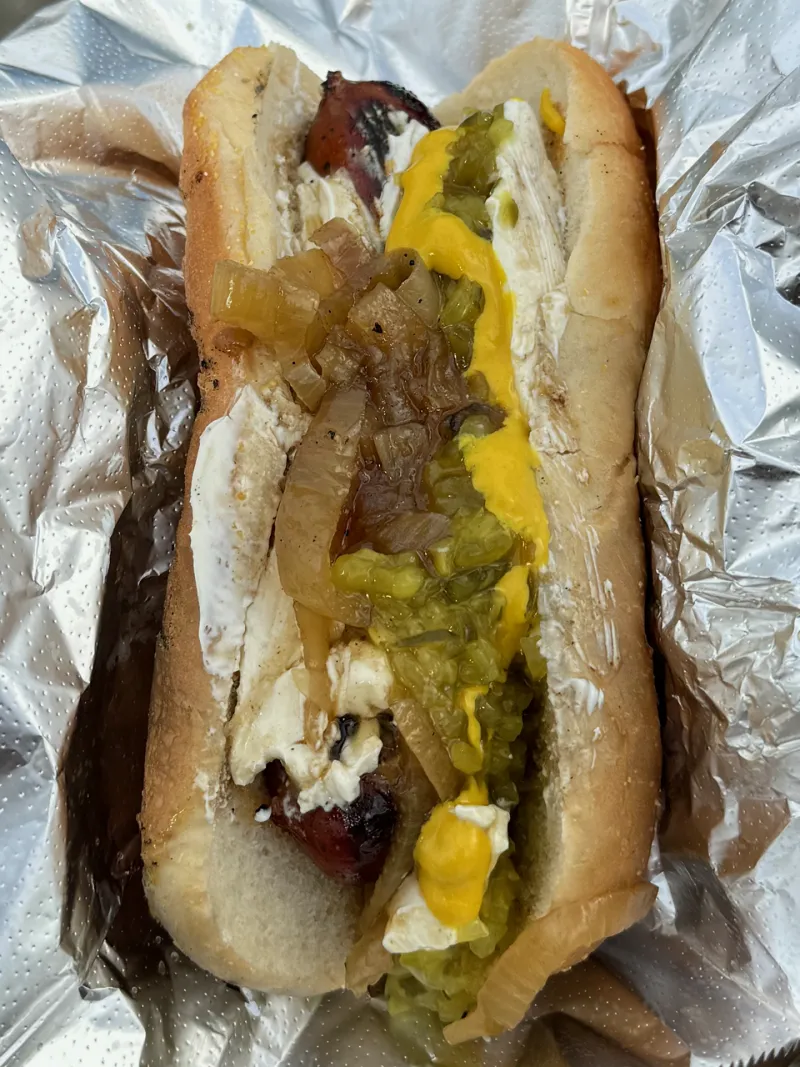
Photo: PK-WIKI, CC BY 4.0, via Wikimedia Commons
There's a restaurant in New York right now charging $38 for a hot dog. It comes on a pillowy, house-made brioche bun slicked with a smear of what the menu calls "fermented yellow emulsion." That's mustard. It's mustard. The hot dog itself? A slow-smoked, natural-casing frank sourced from a heritage breed pig raised on an upstate farm where the pigs apparently listen to jazz. The thing is absolutely delicious, and if you're feeling some kind of way about that price tag, you're not alone — but you might also be missing the point.
High-end American chefs have quietly, then loudly, then completely without shame, declared their love for the foods that their culinary school instructors once told them to forget. Gas station roller dogs. Convenience store nachos. The cheese from a can. The Little Debbie on the gas station counter. These aren't guilty pleasures anymore — they're inspiration.
And it's not a gimmick. It's a full-blown cultural reckoning happening at the very top of the food chain.
From White Tablecloths to Wawa: What Changed
For decades, American fine dining operated with a massive chip on its shoulder. French technique was the gold standard, and anything that smelled like a county fair or a truck stop was strictly beneath consideration. Chefs who wanted to be taken seriously buried their roots. You didn't talk about the Velveeta your grandmother used. You didn't mention the corn dog that shaped your entire relationship with food. You learned your mother sauces and you kept your mouth shut about the McDonald's you hit at 2 a.m. after culinary school exams.
Then something cracked.
Part of it was generational. The chefs dominating kitchens now grew up eating the same processed, preservative-laden, gloriously engineered snack foods as the rest of us. Their food memories aren't tied to rustic European countryside meals — they're tied to 7-Eleven runs and ballpark nachos and the specific synthetic orange powder that coats your fingers after a bag of Cheetos. Those are real food memories. And at some point, pretending otherwise started feeling dishonest.
Part of it was also a market correction. Diners got tired of precious food. They got tired of spending $200 on seventeen bites of something that tasted like ambition and looked like modern art. They wanted flavor. They wanted satisfaction. They wanted something that hit.
The Chefs Making It Happen
The movement has a few key figures who helped legitimize the whole thing. Sean Brock, the James Beard Award-winning chef behind Husk, spent years celebrating Southern food traditions that the culinary establishment had spent decades ignoring — including the deeply unglamorous stuff. His willingness to treat boiled peanuts and pimento cheese with the same reverence as a classic French preparation opened a door that hasn't closed since.
Chef Aarón Sánchez has talked openly about how the street food and convenience store culture of his youth in El Paso shaped his palate in ways that no amount of classical training could replicate. The bold, punishing, unapologetic flavor profiles of border snack foods? That's a philosophy, not a guilty pleasure.
And then there's the wave of newer voices — the sous chefs turned head chefs turned Instagram sensations who are building entire menus around the question: what if we made this the right way? What if the Frito pie got the same attention as a beef bourguignon? What if the corn dog was made with hand-ground pork and a tempura batter that took three days to develop? What if the nacho cheese wasn't from a bag but was instead a carefully calibrated blend of aged American and Velveeta (yes, Velveeta) that's been slow-cooked into something transcendent?
Spoiler: it's transcendent.
The Velveeta Question
Here's where things get philosophically interesting, and also kind of hilarious. Velveeta is a processed cheese product that contains ingredients no serious cheesemaker would go near. It also melts in a way that no "real" cheese can fully replicate — smooth, glossy, almost obscenely creamy. Chefs who've spent years fighting against it have started quietly admitting that for certain applications, nothing else works quite the same way.
This is the central tension of the whole movement: the industrial food complex, for all its sins, figured out some things about texture and flavor delivery that artisan producers haven't cracked. The question isn't whether Velveeta is "good" in some pure sense. The question is whether the experience it creates is valid. And increasingly, the answer coming out of serious kitchens is: yeah, actually, it kind of is.
That's not a surrender to corporate food. It's an honest engagement with the American food landscape as it actually exists — not as culinary purists wish it did.
Why This Matters Beyond the Trend Cycle
Every few years, food media declares some version of this story — "fine dining gets casual!" "chefs embrace street food!" — and then the next trend rolls in and everyone moves on. But what's different about this current moment feels more structural.
The chefs leading this charge aren't doing it ironically. They're not putting a hot dog on the menu as a wink-and-nod joke about class. They're doing it because the hot dog, done right, is one of the great American flavor experiences. Because the combination of smoke and fat and salt and snap and that specific bread-to-meat ratio is genuinely sophisticated when you actually break it down. Because gas station food, in its own weird way, is a legitimate expression of American food culture — and American food culture is worth taking seriously.
Fat 315 has been saying this for a while: there's no shame in eating big, eating bold, and eating the things that actually taste good to you. Turns out the Michelin crowd is finally catching up.
The $38 hot dog is a lot of money. But the fact that it exists at all? That's a win for every person who's ever been made to feel bad about what they eat. The fancy chefs finally came to the cookout. And they brought fermented yellow emulsion.
It's mustard. And it slaps.