Tater Tots and Tears: The Unphotogenic Casserole Is Eating America Again
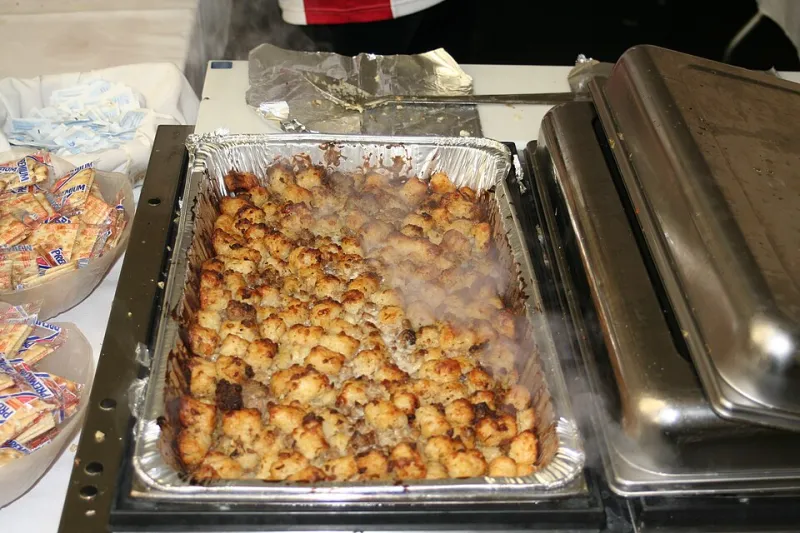
Photo: SEWilco, CC BY-SA 3.0, via Wikimedia Commons
There was a time, not long ago, when the casserole was the food you apologized for. It came in a 9-by-13 pan, it looked like a delicious accident, and it never once appeared in a magazine spread unless the magazine was about nostalgia. Then something shifted. In 2026, the casserole is back, and it is not asking for your permission.
Younger cooks are making tater tot hotdish. They are assembling green bean casserole without irony. They are calling funeral potatoes by their proper name and bringing them to Friendsgiving like a sacred offering. The church cookbook, that spiral-bound treasury of cream-of-something cuisine, has become a source of genuine fascination for people who grew up on meal kits and TikTok recipes.
This is not just a food trend. It is a retreat from the aesthetic industrial complex.
The Anti-Aesthetic Is the Point
Somewhere along the way, food became a visual product. Every plate needed a smear. Every bowl needed a garnish. Every dinner needed to look like it was being reviewed by a panel of judges who also ran a lighting company. The casserole does not care about any of that. It is a pan of ingredients that get along, baked until bubbly, served with a spoon.
That is exactly why it is winning. The casserole is the opposite of performative. It is food you make when you are tired, when money is tight, when you need to feed a crowd, or when you need to bring something to a neighbor who is going through it. It is not pretty. It is reliable. In a culture that has spent years optimizing the look of dinner, reliable is starting to feel like luxury.
Funeral Potatoes and Other Sacred Texts
Let us be specific. The casserole comeback is not about a single dish. It is about a whole genre. Tater tot hotdish is the Midwest's gift to the nation: a creamy, savory, crunchy-topped pan of comfort that feeds six people for less than a pizza delivery. Green bean casserole is the holiday side that refuses to be replaced, no matter how many chefs try to deconstruct it. Funeral potatoes, that cheesy, creamy, cornflake-topped classic, have crossed over from church basements to TikTok feeds and back again.
These dishes share a DNA. They are cheap. They are forgiving. They are easy to double. They do not require a culinary degree or a trip to a specialty store. You can make them with frozen vegetables, canned soup, shredded cheese, and a bag of tater tots. That is not a compromise. That is a strategy.
The church cookbook is the original recipe blog. It is full of names like 'Aunt Linda's Hot Dish' and 'Casserole That Everyone Asks For.' It is not trying to be original. It is trying to be useful. And right now, useful is having a moment.
Why Younger Cooks Are Reaching for the 9-by-13
There is a practical explanation for the comeback. Food prices are not exactly cooperating with the fantasy of the aesthetic dinner. A pan of tater tot hotdish can feed a group for the price of one fancy entree. It also reheats well, freezes well, and does not demand that you plate it like a contestant on a cooking show.
But the deeper reason is emotional. The casserole is a form of care that does not require words. You make it when someone has a baby. You make it when someone is sick. You make it when someone dies. You make it when you are broke and still want to have people over. It is a pan of food that says: I do not know what to say, but I know how to turn on the oven.
Younger generations are not discovering this because they are nostalgic for a past they never had. They are discovering it because it works. The casserole is a break from the pressure to be impressive. It is a way to be generous without being rich. It is a way to be creative without being precious.
Pretty Food Peaked
The aesthetic food era is not dead, but it is tired. People still want their food to look good. They just do not want it to look good at the expense of everything else. The casserole does not photograph well. It is brown and beige and bubbly and sometimes a little soupy. It looks like what it is: dinner.
That is the rebellion. The casserole is the anti-aesthetic that actually tastes good. It is the food you bring to a potluck and watch disappear before the fancy salad. It is the dish that gets scraped clean while the artisanal grain bowl sits there, looking beautiful and slightly lonely.
So yes, the casserole is back. It is in the church cookbook, on the weeknight table, and on the potluck circuit. It is unphotogenic. It is unpretentious. It is unapologetic. And honestly, it is about time.