Griddle Lights On at Midnight: Inside the Shift That Feeds America While You Sleep
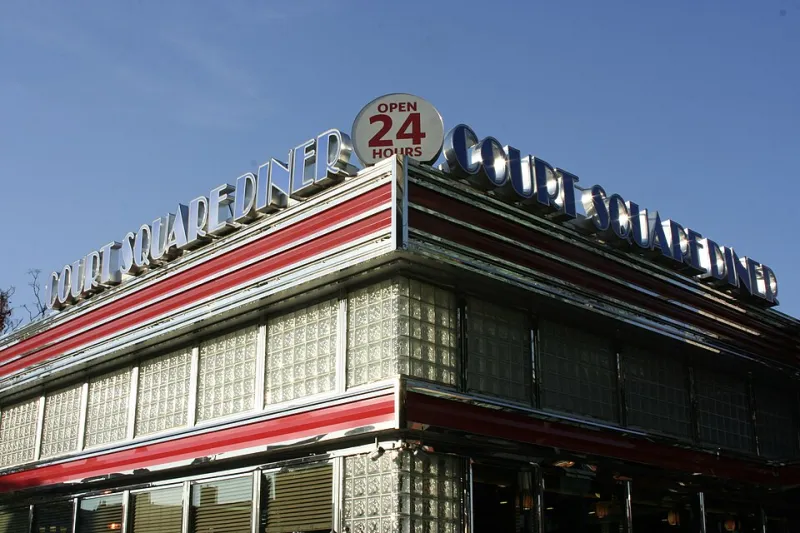
Photo: Erwin Bernal, CC BY 2.0, via Wikimedia Commons
At 1:47 a.m. on a Tuesday, the dining room of a 24-hour diner on the edge of town holds a nurse coming off a twelve-hour shift, a long-haul trucker finishing his federally mandated break, a bartender drinking coffee before her own shift ends, and one guy in the corner booth who has been there since dinner and shows no signs of leaving.
This is the 2 a.m. economy, and if you've never worked a night shift, you've probably never seen it. That's a shame, because it might be the most authentic food culture operating in the United States right now.
The Customers Don't Have a Choice. The Cooks Do.
Nobody works the overnight griddle because it's glamorous. It's brutal — inverted hours, a skeleton crew, and a dining room that cycles through every walk of American life before sunrise. The people who do it do it because someone has to, and because there's a specific pride in being the only lit window for twenty miles.
Ask any overnight cook and they'll tell you the same thing: the day shift feeds customers. The night shift feeds people. The difference matters. A third-shift regular isn't there for a vibe or a photo — they're there because their body needs food at a time the rest of the world pretends doesn't exist.
The Taco Truck Is the New Town Square
In city after city, the overnight food scene has migrated outdoors. Warehouse districts and hospital corridors and the blocks around last call — that's where you'll find the taco trucks, the halal carts, the tamale coolers, and the late-night barbecue smokers feeding the people who keep the city running while it sleeps.
These operations run on razor-thin margins and word of mouth. There's no marketing budget, no reservation system, no tasting menu. There is a line of nurses at 3 a.m., and there is a pastor who knows everyone in it. That's the entire business model, and it's been working for decades.
Why This Scene Matters More Than Ever
Here's the uncomfortable math: as chains consolidate and independent diners close, the 24-hour footprint of American food is shrinking. The overnight diner that once anchored every highway exit is becoming rare, squeezed by labor costs and delivery apps that don't staff griddles at 3 a.m.
What's left is a finite resource: a handful of restaurants, trucks, and counters where a night-shift worker can get a hot plate and be treated like a human being. The regulars know it. That's why the same faces show up at the same time every night — the 2 a.m. economy runs on ritual, not reservations.
Eat There Once. Seriously.
If you've never eaten at 2 a.m. on purpose — not after a bar, just because — put it on your list. Order whatever the regulars order. Tip like your waitress just dealt with the worst table of her career, because she probably did an hour ago.
You'll eat a plate of eggs at an hour that feels slightly illegal, surrounded by people whose lives run on a schedule most of us never think about. And you'll understand, maybe for the first time, that the best restaurant in your town might not have a review count. It might just have a light on.