Twenty Bucks, No Apologies: The Home Cooks Dismantling Fine Dining One Grocery Run at a Time

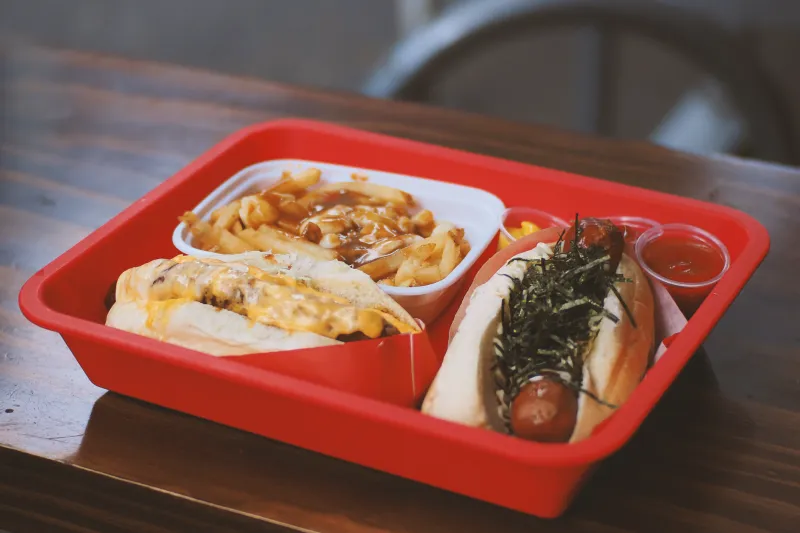
Photo by Photo by Cord Allman on Unsplash on Unsplash
Somewhere between the $34 pasta dish at that downtown Italian place with the Edison bulbs and a $1.79 box of rigatoni from the store-brand aisle, a revolution is quietly boiling over. Not the kind with manifestos and matching T-shirts — the kind with a cast iron skillet, a phone propped up against the dish rack, and a comment section full of people losing their minds in the best possible way.
Welcome to the grocery store rebellion. It doesn't have a dress code. It doesn't take reservations. And it is absolutely eating fine dining's lunch.
The Setup: Restaurants Priced Themselves Out of the Conversation
Let's be honest about what happened here. Post-pandemic inflation didn't just nudge restaurant prices up a little — it launched them into a completely different tax bracket. A sit-down dinner for two that used to run $60 is now flirting with $120 before you've even thought about dessert. Tipping culture did its thing. Portion sizes quietly shrank. And somewhere along the way, a whole generation of Americans looked at their bank account and their takeout habit and made a decision.
They decided to figure it out themselves.
Not in a sad, making-do kind of way. In a watch me reverse-engineer your entire menu with $20 and a YouTube tutorial kind of way. The energy shifted. What used to feel like a consolation prize — cooking at home because you couldn't afford to go out — started feeling like a flex. A legitimate, shareable, comment-section-exploding flex.
The Technique Thieves Are Winning
Here's what nobody in culinary school is advertising: most restaurant techniques aren't actually that complicated. They're just unfamiliar. The reason your pan sauce tastes thin at home isn't because you lack talent — it's because nobody ever told you to reduce it for four more minutes and finish it with cold butter. That's it. That's the whole secret.
Creators online figured this out and ran straight to the camera with it.
Take the beurre blanc situation. For decades, that phrase lived exclusively on white tablecloth menus next to fish dishes that cost $42. Then a woman in Columbus, Ohio filmed herself making it on a Wednesday night with grocery store white wine and a $6 stick of European-style butter, and the video got 2.3 million views. People in the comments were genuinely upset — not at her, but at the restaurants that had been charging them $40 for something that takes eleven minutes.
Or consider the dry-brine movement. Steakhouses have been quietly salting their cuts 24 to 48 hours in advance for years, letting the salt penetrate the meat and create that crust that makes you briefly forget your own name. Now that technique is all over TikTok and Instagram Reels, demonstrated by regular people on regular nights, using ribeyes from a Walmart meat case. The results are genuinely indistinguishable from what you'd pay $65 for at a chophouse with a valet.
The technique is out of the bag. It cannot be put back.
The $20 Grocery Run as a Content Format
What's really interesting — and what's driving the audience numbers — isn't just that people are cooking better food. It's that the constraint has become the content.
The format is everywhere now: creator walks into a grocery store with a specific dollar amount, usually somewhere between $15 and $25, and challenges themselves to produce something that would embarrass a restaurant. The budget isn't a limitation. It's the whole point. It's the storytelling engine.
Viewers aren't just watching for the recipe. They're watching for the problem-solving. Which protein is on sale? Can a can of San Marzano tomatoes do the heavy lifting here? What happens if you use chicken thighs instead of the breast the recipe calls for? These micro-decisions, filmed in real kitchens with real lighting (meaning: bad lighting), are captivating in a way that glossy food television never quite managed to be.
Because it's real. It's messy. The splatter guard is missing. The onions are taking longer than expected. And then the dish comes out looking like something from a magazine, and the whole comment section erupts.
Why the Anti-Elitist Angle Is Landing So Hard Right Now
Food has always had a class problem. The idea that good eating requires either money or formal training is baked into how we talk about cuisine in this country. Michelin stars. Culinary school pedigrees. The reverent whisper that a chef "trained in France." For a long time, that gatekeeping held.
It's not holding anymore.
The creators who are blowing up right now aren't positioning themselves as food experts. They're positioning themselves as people who figured something out and couldn't wait to tell you. That distinction matters enormously. There's no pedantry. No condescension. No implication that you'd ruin it if you tried. Just: here's what I did, here's what worked, go try it tonight.
Audiences are hungry — genuinely hungry — for that kind of generosity. After years of food content that made cooking feel aspirational in the most exhausting way, content that just helps people eat better feels almost radical.
The Restaurants Are Paying Attention (And Some Are Nervous)
This isn't going unnoticed by the industry. Chefs who built careers on mystique are watching their techniques get democratized in real time, and the reactions vary wildly. Some are genuinely delighted — the "good, more people should cook" crowd. Others are less thrilled, particularly the ones whose business model depends on the perception that what happens in a professional kitchen cannot be replicated at home.
Spoiler: it increasingly can.
What restaurants still have going for them is the experience — the ambiance, the service, the occasion. And that's real. Nobody's arguing that a Tuesday night in your own kitchen has the same energy as a date night out. But the idea that the food itself is beyond reach? That argument is getting harder and harder to make when a 28-year-old in a Memphis apartment is posting a brown butter gnocchi that looks better than anything on your prix fixe menu.
The Takeaway (Pun Fully Intended)
The grocery store rebellion isn't a trend. It's a recalibration. People are realizing that the distance between a $9 grocery haul and a $40 restaurant plate is mostly just knowledge — and knowledge is now free, widely distributed, and arriving in your feed whether the culinary establishment likes it or not.
Fat 315 has always been about the food that actually gets eaten by actual people in actual America. And right now, what's getting eaten is getting better, getting cheaper, and getting filmed. The gatekeepers had a good run.
The cast iron is preheated. The butter is about to brown. And twenty bucks is starting to look like more than enough.