Chaos Cooking Is Winning: How Real Americans Told Influencer Meal Prep to Go Pound Sand
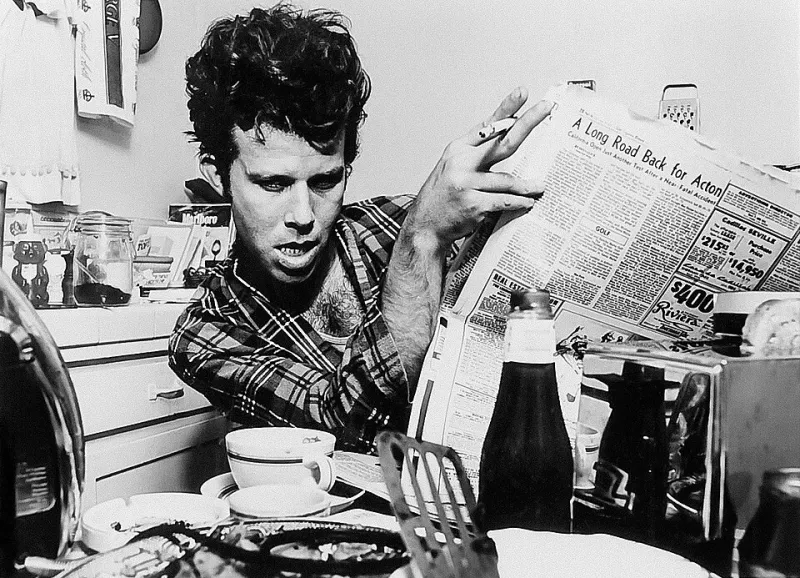
Photo: Photograph by Greg Gorman, according to the Tom Waits Library. Published by Asylum/Herb Cohen Management., Public domain, via Wikimedia Commons
Somewhere between the third consecutive Sunday you spent watching a food creator brunoise shallots with terrifying precision and the moment you realized you'd bookmarked 847 recipes you would never actually make, something snapped. Not in a bad way. In a liberating, fridge-door-swinging, what the heck is in here kind of way.
Chaos cooking — the completely unscientific, deeply human practice of assembling dinner from whatever survived the week — is having a genuine cultural moment. And it's not just lazy. It's a full-throated rejection of the influencer recipe industrial complex, and people are eating it up. Literally.
The Bookmark Graveyard Nobody Talks About
Here's a number that should haunt every food content creator: the average American saves somewhere between 50 and 200 recipes online per year and cooks maybe four of them. The rest live in a digital purgatory — Pinterest boards named "Healthy Weeknight Wins" that haven't been opened since 2021, Instagram saves buried under reels of someone making sourdough in a $400 Dutch oven.
The problem was never motivation. It was the gap between what those recipes required and what actually existed in a normal American kitchen at 6:47 PM on a Tuesday. Saffron threads. Pomegranate molasses. "High-quality finishing salt" as if Morton's has been letting us down this whole time. The influencer recipe machine is built for aspirational cooking, and aspirational cooking is exhausting when you're also a person with a job and a car that needs an oil change.
So people started doing what humans have done for centuries before anyone had a ring light: they opened the cabinet and figured it out.
TikTok's Accidental Honesty Movement
Credit where it's due — TikTok cracked the door open on this one. Not the polished side of TikTok, but the chaotic, unlit, filmed-on-a-phone-propped-against-a-paper-towel-roll side. Creators started posting what they actually ate, and the response was volcanic.
A video of someone making pasta with jarred pesto, canned tuna, and a squeeze of lemon they found rolling around in the back of the fridge will consistently outperform a meticulously produced piece about hand-rolled gnocchi. The comments aren't polite. They're grateful. "I've been making this for years and was embarrassed to tell anyone." "This is literally my Tuesday meal and I thought I was failing at adulting." "Okay but this goes HARD."
The format has a name now: "fridge clean-out" content. Or "pantry dump" videos. Or, more honestly, "I forgot to go to the grocery store" cooking. Whatever you call it, it's generating millions of views because it reflects the actual texture of how most Americans feed themselves — improvised, slightly anxious, and usually better than expected.
Food creators like Ethan Chlebowski have built substantial audiences partly on the idea that cooking doesn't have to be precious. Others have gone even further, leaning into the anti-aesthetic entirely: bad lighting, messy counters, real-time second-guessing. The audience doesn't just tolerate the mess. They show up for it.
The "Wrong" Recipe That Tastes Right
Here's the dirty secret the food world doesn't love admitting: a lot of "wrong" combinations are actually fine. Great, even. The rules around what goes with what, what technique is acceptable, what ingredients belong in the same zip code — a significant chunk of those rules exist to sell you more stuff or make food media feel sophisticated.
Canned tuna in pasta? That's a classic Italian preparation. Peanut butter in a savory sauce? Half of Southeast Asian cuisine says hello. Throwing yesterday's roasted vegetables into scrambled eggs with whatever cheese is about to go bad? That's a frittata, and frittatas are served at brunch for $18.
The chaos cook doesn't always know they're doing something legitimate. They're just hungry and working with constraints. But the outcome — a meal built from necessity rather than a shopping list — often carries a flavor that curated recipes can't fake: the taste of actually trying with what you have.
Why Perfectionism Broke the Kitchen
The influencer meal prep era did real damage to how Americans relate to home cooking. It created a performance standard that most people couldn't hit — and more importantly, didn't need to hit. Color-coded meal prep containers. Matching bowls. Garnishes on a Wednesday. The implicit message was that cooking at home was only worth documenting if it looked like it belonged in a magazine, and only worth eating if it hit some nutritional benchmark calculated by someone with a certification.
The psychological toll of that is underappreciated. When the bar is perfection, the easiest response is to not try. Delivery apps got fatter. Frozen food aisles got longer. And the actual skill of improvising a meal — one of the most useful things a human being can know how to do — quietly atrophied for a generation that was too intimidated to make anything that didn't look like content.
Chaos cooking pushes back on all of that. It says: the point is to eat. The point is to use what you have. The point is that feeding yourself and the people around you is inherently worth doing, even if the lighting is terrible and you're not entirely sure what you'd call the dish.
The New Pantry Confidence
What's actually happening beneath the trend is something more durable than a content cycle. People are relearning kitchen confidence — the kind that doesn't require a recipe at all. The kind that looks at half an onion, some dried pasta, a can of white beans, and a wilting sprig of rosemary and sees dinner instead of a problem.
This is how most of the world has always cooked. It's how your grandmother cooked. It's how diners and greasy spoons have operated forever — with what's available, with what's cheap, with what makes sense given the context. The influencer era made that feel like settling. Chaos cooking is reclaiming it as the real skill.
And here's the thing: when you stop trying to replicate someone else's perfectly lit bowl of grain salad and start just cooking the food you actually have, you start learning your own palate. You figure out that you like things a little saltier than most recipes call for, or that you'll always add more garlic than is technically reasonable, or that you have a genuine gift for throwing together a sauce from pantry dregs that your roommates will ask you to make again.
That's not failure. That's actually cooking.
Big Flavor, Zero Grocery Runs
The pantry meal doesn't need defending anymore. The canned tuna pasta is valid. The frozen vegetable stir-fry with whatever soy sauce and sesame oil situation you've got going is valid. The "I just dumped a bunch of stuff in a pan and it worked" dinner is not only valid — it's the meal most worth being proud of, because it required actual thought instead of just following instructions.
Influencer recipes will keep coming. The aesthetically perfect grain bowls and the forty-five-step weekend projects will keep getting bookmarked and never made. But in kitchens across the country, regular people are doing something more interesting: opening the cabinet, taking stock of what's actually there, and making it work.
No apologies. No garnish. Just dinner.
And honestly? It slaps.