Froot Loops Won: How Gen Z Torched the Wellness Breakfast and Never Looked Back
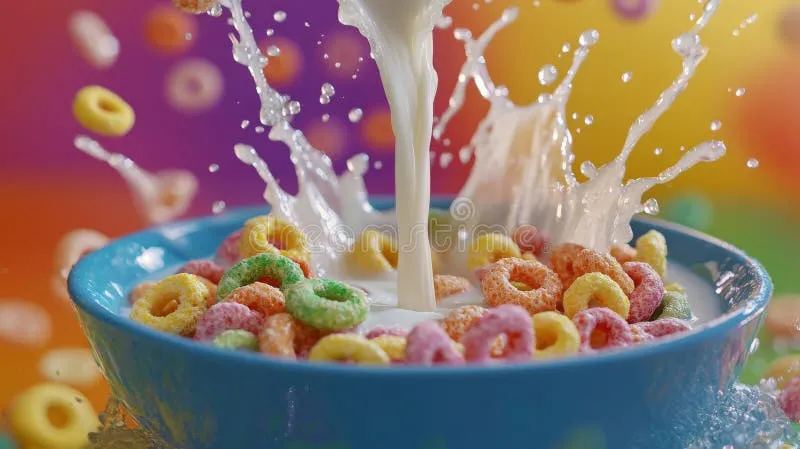
Photo: colorful sugary cereal bowl with milk splashing fun bright, via thumbs.dreamstime.com
Somewhere between the third Instagram post of a perfectly layered açai bowl and the fourteenth wellness influencer explaining the "gut-brain axis," an entire generation quietly walked into a Kroger, picked up a family-size box of Lucky Charms, and felt absolutely nothing but relief.
Gen Z is done performing breakfast. And honestly? The numbers are backing them up.
The Açai Bowl Had a Good Run. It's Over.
For about a decade, the American breakfast landscape got aggressively aspirational. Overnight oats. Grain bowls. Smoothies with adaptogens in them. Things that required soaking, blending, or a 45-minute prep window that no human being with a real life actually has on a Tuesday morning.
The wellness breakfast industrial complex convinced an entire demographic that eating well before 9 a.m. was a moral achievement. You weren't just eating — you were optimizing. You were doing the work. You were, as the branded wellness content liked to say, "choosing yourself."
Gen Z looked at all of that, looked at a bowl of Cocoa Puffs, and chose the Cocoa Puffs.
According to market research from Circana (formerly IRI), ready-to-eat cereal sales in the US climbed back above $10 billion in recent years after years of flat or declining performance. The brands driving that recovery aren't the fiber-forward adult cereals. They're the ones with cartoon mascots, neon colors, and enough sugar to make a dentist wince from across the room.
Kellogg's reported that Froot Loops, Frosted Flakes, and Apple Jacks all saw meaningful sales bumps among the 18-to-34 demographic. General Mills had similar news about Lucky Charms. The marshmallow-to-cereal ratio conversation is happening again in American kitchens, and it's happening with zero shame attached.
TikTok Made It a Whole Thing
You can't tell this story without talking about what happened on TikTok, because TikTok is where the rebellion got its uniform.
Creators started posting cereal content — not reviews, not recipes, just cereal — and the engagement was unhinged in the best possible way. Videos of people pouring massive bowls of Count Chocula at midnight. Debates about the correct milk-to-cereal ratio. Blind taste tests between Honey Smacks and Golden Grahams. Tutorials on achieving the perfect soggy-but-not-destroyed Cocoa Pebbles texture.
One creator in the space described it this way: "People aren't posting cereal because they think it's impressive. They're posting it because it's real. It's what they actually eat. And after years of watching people perform these elaborate healthy breakfasts, seeing someone just pour a bowl of Cap'n Crunch and go to town feels like watching someone finally exhale."
That exhale is the whole product. The appeal isn't just the sugar — it's the permission.
The Nutritionist in the Room
Okay, fine. We have to acknowledge the nutritionist in the room.
Is a bowl of Froot Loops with two percent milk an optimal breakfast from a macronutrient standpoint? No. Is it going to give you the sustained energy of a high-protein meal? Also no. Does it contain more sugar in a single serving than most major health organizations recommend before noon? Probably.
But here's the thing that registered dietitians who aren't trying to sell you a supplement are increasingly willing to say out loud: the psychological cost of rigid, performative eating is real. When every meal becomes a moral statement, when breakfast requires a 30-minute prep and a grid-worthy presentation, the stress of that routine creates its own set of problems.
Some nutrition professionals are pushing back on the idea that sugary cereal is categorically a disaster. Context matters. A bowl of Lucky Charms eaten at home, without guilt, by a person who otherwise eats reasonably well, is not the nutritional apocalypse that wellness culture made it out to be. It's a bowl of cereal. Humans have been eating it since the 1960s and somehow most of them survived.
The movement toward food flexibility — sometimes called "food freedom" in dietitian circles — is gaining traction precisely because the alternative produced a generation of people who felt like failures for wanting a bowl of cereal.
The Marketing Pivot Nobody Saw Coming
The cereal brands themselves didn't exactly see this coming either, which makes it funnier.
For years, companies like Kellogg's and General Mills were trying to grow up. They launched protein-forward lines. They added whole grain claims to the front of boxes. They tried to make adults feel like eating cereal was a sophisticated, responsible choice by burying the fun stuff under health language.
Then Gen Z showed up and basically said: don't bother. We want the thing with the cartoon tiger. We want the marshmallows. We want the prize in the box even though there isn't one anymore and that's also a little depressing but whatever.
Food marketers who work with CPG brands describe a genuine recalibration happening in how these companies are approaching the younger consumer. The wellness positioning that worked for older millennials isn't landing. What's landing is authenticity, nostalgia, and the kind of unapologetic indulgence that Fat 315 has been championing since day one.
One marketing strategist put it bluntly: "You can't out-health the health brands. But you can own the fun. And right now, fun is winning."
This Is What a Food Rebellion Actually Looks Like
Here's the thing about calling this a rebellion: it genuinely is one, just not the dramatic kind.
It's not a protest. There are no signs. Nobody is marching against overnight oats (though honestly, someone should). It's quieter than that. It's a generation that watched wellness culture become its own form of status performance, decided they didn't want to participate, and expressed that decision by buying a box of cereal that costs $4.99 and tastes like artificial fruit and childhood.
That's a legitimate cultural statement. Rejecting the idea that breakfast has to be optimized, photographed, and posted as evidence of your commitment to self-improvement — that's not laziness. That's a value system. A pretty reasonable one, actually.
The açai bowl isn't dead. The overnight oats crowd isn't going anywhere. But they're no longer the default, no longer the aspirational endpoint of what a good breakfast person looks like.
Right now, the kid with the enormous bowl of Cinnamon Toast Crunch, eating it over the sink at 7 a.m. while watching something dumb on their phone, is the one winning the cultural moment.
And they know it. That's the whole point.
Fat 315 does not endorse eating an entire family-size box of Froot Loops in one sitting. We do, however, fully understand it.