Stouffer's Is Back and Nobody's Embarrassed About It Anymore
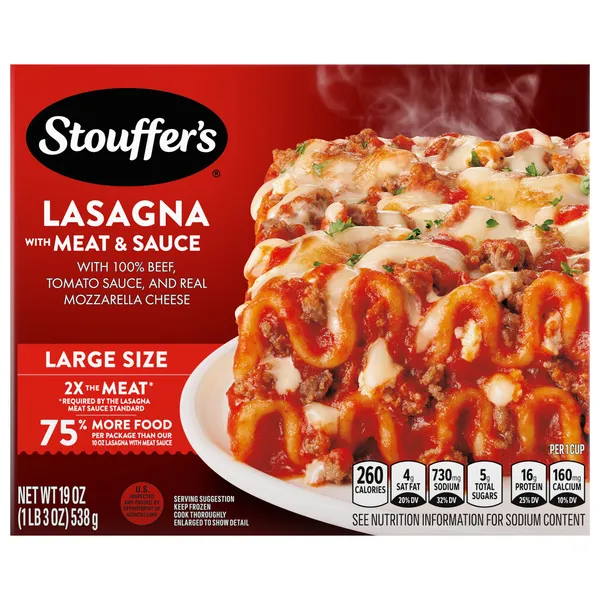
Photo: frozen dinner tray Stouffer's lasagna open on kitchen counter casual home setting, via i5.peapod.com
For about a decade, frozen dinners occupied a very specific cultural corner: the sad desk lunch, the post-breakup tray you ate standing over the sink, the thing you served guests only if you wanted them to question your entire existence. Cooking from scratch was the virtue signal. Meal prepping was the religion. And if you weren't drizzling homemade tahini over a grain bowl at 11 PM on a Tuesday, well — what were you even doing with your life?
That era is dying. And honestly, good riddance.
Millennials — the same generation that was lectured for years about avocado toast bankrupting their futures — are quietly, gleefully, and completely unapologetically returning to the freezer aisle. Not because they've given up. Because they've wised up.
The Math Nobody Wanted to Admit
Let's talk numbers for a second, because the economics of "cooking at home is cheaper" have gotten genuinely complicated. A pound of ground beef isn't what it was in 2019. Neither is olive oil, eggs, or a bag of decent pasta. When you add up the full cost of a from-scratch meal — ingredients, the energy to actually make it, the time you spent watching three YouTube tutorials on how to properly deglaze a pan — a Stouffer's lasagna at $6.99 starts looking less like a consolation prize and more like a rational decision made by a functioning adult.
Cost-of-living pressure is real, and it's reshaping how younger consumers think about food. The aspirational kitchen — the one with the copper pots and the fresh herb garden on the windowsill — was always a little bit of a fantasy. Now it's a fantasy with a $400 monthly grocery bill attached to it, and people are opting out.
Frozen food sales have climbed steadily over the past few years, and the demographic shift is notable. It's not just older consumers or households with kids. It's people in their late twenties and thirties who know exactly what they're buying and have made peace with it.
Nostalgia as a Coping Mechanism
Here's where it gets a little more layered. Because it's not purely financial. There's something emotionally going on with the frozen dinner comeback, and it has everything to do with the particular way millennials process childhood.
Stouffer's mac and cheese, Marie Callender's pot pie, a Lean Cuisine from the back of your mom's freezer — these aren't just foods. They're sensory time machines. They taste like snow days and sick days and staying up too late watching cable TV in a house where someone else was responsible for the mortgage. In a world that keeps asking younger adults to hustle harder, optimize everything, and treat their bodies like productivity machines, cracking open a frozen fettuccine Alfredo and eating it directly from the tray is practically a therapeutic act.
Brands know this, obviously. Stouffer's has leaned into its legacy positioning with the kind of confidence that comes from knowing you've outlasted every food trend of the last thirty years. While newer premium frozen brands like Amy's and Tattooed Chef chased the wellness crowd, the old-school names quietly stayed in their lane. And now that lane is crowded with converts.
The Wellness Backlash Nobody's Talking About Loud Enough
If you've spent any time on the internet in the past five years, you've been aggressively marketed to about what you should and shouldn't put in your body. Whole30. Keto. Paleo. Intuitive eating. Anti-inflammatory everything. The messaging is relentless, contradictory, and often attached to someone trying to sell you a supplement.
At some point, a critical mass of people quietly decided they were done. Not done caring about health entirely — but done performing wellness for an audience. Done treating every meal like a moral statement. Done pretending that cooking a complicated recipe from a celebrity chef's cookbook was self-care rather than a two-hour unpaid labor commitment.
Choosing a frozen dinner, in this context, becomes subtly rebellious. It's a small, private refusal to participate in the exhausting theater of optimal eating. You're not documenting it. You're not hashtagging it. You're just eating dinner like a normal person who has other things going on.
That energy — quiet, unbothered, slightly defiant — is very much on brand for where a chunk of millennial culture has landed.
The Premium Frozen Tier Changed Everything
It would be incomplete to talk about the frozen dinner revival without acknowledging that the category itself has genuinely improved. The freezer aisle in 2024 is not the freezer aisle of 1997. You've got options now that would have seemed absurd two decades ago: Korean BBQ bowls, cauliflower gnocchi with actual flavor, Thai green curry that doesn't taste like sadness, and frozen burritos that compete directly with fast casual.
Brands like Trader Joe's built entire cult followings on their frozen section. The Mandarin Orange Chicken alone has probably prevented thousands of DoorDash orders. When the product quality crosses a certain threshold, the stigma starts to dissolve. And once the stigma dissolves, the floodgates open.
Millennials who grew up eating Hungry-Man dinners with their dads are now buying Rao's frozen pasta and feeling perfectly fine about it. The throughline isn't the specific product — it's the permission structure. Once you decide it's okay, the whole category becomes available to you again.
Eating Without the Performance
There's a version of this trend that gets written up as a sad story — young people too broke and too burned out to cook a real meal, retreating to processed food because the dream failed them. That framing is both condescending and wrong.
What's actually happening is more interesting. A generation that was sold a very specific vision of domestic achievement — the dinner party, the sourdough starter, the Instagram-worthy charcuterie board — is selectively rejecting the parts that don't serve them. They'll still make the fancy pasta when they feel like it. They'll still go to the nice restaurant for a birthday. But on a random Wednesday when nobody's watching and there's a Stouffer's chicken pot pie in the freezer, they're eating the pot pie and feeling absolutely nothing negative about it.
That's not failure. That's a pretty healthy relationship with food, actually.
Fat 315 has always been about eating without the apology attached. And if the broader culture is finally catching up — if frozen lasagna is getting its moment in the sun — then we're just glad to see it.
Peel back the film. Let it rest two minutes. Eat it on the couch.
You've earned it.