You're Basically Tipping the Algorithm: The Real Math Behind Every Delivery App Order
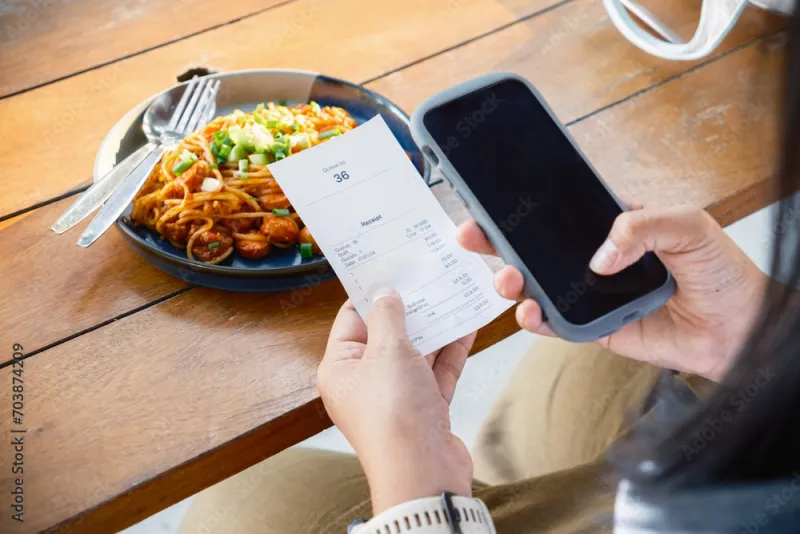
Photo: smartphone food delivery app order receipt fees closeup, via as1.ftcdn.net
Let's set the scene. It's 9:47 PM on a Tuesday. You're horizontal on the couch, you haven't moved in two hours, and there's a perfectly good Thai place exactly 1.3 miles from your front door. You open the app. You find the restaurant. You see the pad thai listed at $14.99, which is totally reasonable, totally fine, totally — wait. Why is your total $27.83?
Congratulations. You just got delivery-app'd.
This is not an accident. It is not a glitch. It is a meticulously engineered system designed to extract maximum cash from your laziness while making sure you never quite understand why the number got so big. Welcome to the real business model of DoorDash, Uber Eats, Grubhub, and every other app that shows up in your phone with cute little icons and promises of convenience.
The Menu Price Is Already a Lie
Here's something the apps don't exactly advertise: the price you see on DoorDash for your local taco spot is almost certainly not the same price on that restaurant's actual menu. Restaurants are routinely charging 10 to 30 percent more on delivery platforms than they do in-store — and they're doing it with the apps' full blessing.
Why? Because the platforms charge restaurants a commission fee that typically runs between 15 and 30 percent of every order. That's not a small bite. For a $20 order, the restaurant might hand over $5 to $6 just for the privilege of existing on the platform. So what do restaurants do? They bake that cost into the menu price. You pay more so the restaurant can afford to pay the app so the app can pay a driver so the driver can show up at your door 45 minutes later with lukewarm fries.
It's a beautiful, terrible machine.
Fee Stacking: A National Sport
Once the inflated menu price gets you in the door, the real fun begins. A typical delivery order on any of the major apps involves some combination of the following charges, often applied in a sequence that feels almost comedically brazen:
- Delivery fee: Usually $1.99 to $5.99, though it can spike during peak hours or bad weather under the banner of "surge pricing."
- Service fee: A percentage-based charge — often 10 to 15 percent of your subtotal — that goes directly to the platform. Not the driver. The platform.
- Small order fee: Some apps charge you extra if you don't spend enough. The punishment for ordering modestly.
- Expanded range fee: If the restaurant is slightly farther than usual, expect a bonus charge for the privilege of wanting that specific place.
- Tip: Which, to be clear, you absolutely should pay because drivers are human beings doing a hard job. But it's worth noting that this gets added on top of everything else after you've already been softened up by five other line items.
Stack all of that onto an inflated menu price and you're routinely looking at a 35 to 45 percent premium over just walking in and ordering yourself. On a $30 meal, that's $10 to $13 in pure overhead. Over a month of regular ordering, that's a car payment. Over a year, that's a vacation you didn't take because you were too busy paying the algorithm for the right to eat dinner horizontally.
The Subscription Trap Is Also Not Your Friend
DoorDash DashPass. Uber One. Grubhub+. Every platform now sells a monthly subscription — typically $9.99 a month — that promises to waive delivery fees and reduce service charges. And look, the math sometimes works out in your favor if you're ordering multiple times a week. But these subscriptions are also brilliant psychological tools.
Once you're paying $9.99 a month for the membership, you're more likely to use the app to justify the cost. The subscription doesn't make delivery cheap — it makes you feel like you'd be leaving money on the table by not ordering. It's the same reason your gym membership makes you feel guilty in a way that actually makes the gym richer, not you healthier.
Also worth noting: even with a subscription, the inflated menu prices still apply. You're not getting the in-store price. You're getting a discount on the fees applied to an already-marked-up price. The house always wins.
How to Reclaim Your Wallet Without Going Full Caveman
Here's the good news: you don't have to delete every app and start picking up every meal in person like it's 2011. You just need to be strategic about it.
Order direct when the restaurant lets you. A lot of local spots now have their own websites or apps with direct ordering — often at in-store prices with a flat delivery fee that's way more reasonable than what the big platforms charge. It takes 90 more seconds to find. It's worth it.
Use the apps as a discovery tool, not a default. Found a new place on DoorDash? Great. Save the address. Order through them directly next time. The app did its job. You don't have to keep paying it forever.
Check the in-store menu price before you order. Most restaurant websites list their actual menu. If the DoorDash price is 20 percent higher on every item, you now know exactly how much your convenience is costing you. Sometimes that's still worth it. Sometimes it'll make you put on shoes.
Skip the upsells. The apps are very good at suggesting add-ons, upgrades, and extras at checkout. That's not generosity. That's a higher subtotal, which means a higher percentage-based service fee, which means more money for the platform. Order what you want. Close the upsell drawer.
The Bottom Line
Nobody is saying delivery apps are evil. They're genuinely useful, they keep restaurants alive during slow nights, and sometimes the couch really does win. But going in with your eyes open changes the whole relationship. You're not getting a deal. You're paying a premium for a service, and knowing exactly what that premium is gives you the power to decide when it's worth it and when it's not.
The pad thai is still $14.99 at the restaurant. It's your $13 in fees that's optional.