Stars Don't Matter Anymore: Why the Best Meal of Your Life Is Probably Happening in a Parking Lot
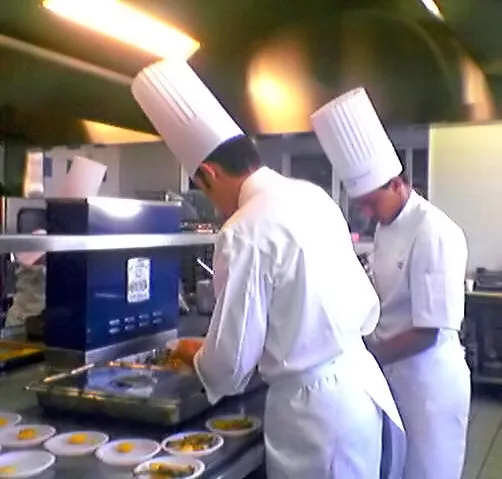
Photo: David Monniaux, CC BY-SA 3.0, via Wikimedia Commons
Somewhere in a strip mall wedged between a nail salon and a tax prep office, a chef who once cooked for heads of state is ladling broth into a styrofoam cup. The line wraps around the building. Nobody has a reservation. Nobody needs one. And the Michelin inspector, if one ever bothered to show up, would have nowhere to sit.
Welcome to the actual future of American dining.
The Credential Collapse Nobody Saw Coming
For decades, the Michelin star was the culinary world's version of a Super Bowl ring — hard to get, harder to keep, and capable of turning a chef into a minor deity. Restaurants chased those stars like they were life itself. Some of them kind of were. The pressure, the cost, the theater of fine dining had a gravitational pull that sucked in talent and money and ambition and occasionally broke people completely.
Then something shifted. It didn't happen overnight, but somewhere between the pandemic gutting the restaurant industry and a generation of eaters who'd rather wait in a parking lot for forty-five minutes than sit through a four-hour tasting menu, the calculus changed. Prestige started to feel like a trap.
Chefs noticed.
"I had a kitchen staff of twenty-two people," says Marcus Delray, who spent eight years running a critically acclaimed modern French restaurant in Chicago before launching a Cajun-Vietnamese fusion truck called Bayou Bành in 2021. "I was working ninety-hour weeks to break even on a good month. Now I've got four people I trust completely, a Tuesday through Sunday schedule, and I took a vacation last year for the first time in a decade. Also I'm making more money."
That last part tends to get people's attention.
The Math That's Making Fine Dining Sweat
Here's the thing nobody in the white-tablecloth world wants to talk about out loud: the economics of prestige dining are genuinely terrible. A high-end restaurant in a major city is burning through rent, front-of-house staff, sommelier salaries, linen service, custom plateware, and a marketing budget designed to attract the kind of press coverage that might — might — keep the reservation line busy enough to survive another quarter.
A well-run food truck or a smartly positioned strip mall counter operation? Different universe.
Overhead is a fraction of the cost. Labor is leaner. The menu is tighter, which means less waste and more consistency. And because the food has to be genuinely outstanding to justify the cult following that keeps these places alive, the chefs behind them are often cooking with a focus and intensity that would make their fine dining former-selves jealous.
Deirdre Okonkwo ran the pastry program at a two-star restaurant in New York for six years before opening Bitter & Sweet, a dessert counter in a Queens strip mall that's become something of a pilgrimage site for people who take sugar seriously. "At the restaurant, maybe two hundred people a night experienced my food. Here, I'm doing three hundred covers on a Saturday and I know half the regulars by name. The connection is completely different."
Okonkwo says she cleared more in her second year at the counter than she ever did in fine dining. She also sleeps.
The Foodie Revolution Is Happening on Google Maps
The audience has changed too, and that matters. The next generation of serious eaters — the people who actually drive food culture forward — are not particularly impressed by white tablecloths and amuse-bouches. They're on Reddit threads arguing about which taqueria in a specific Dallas strip mall has the best al pastor. They're making forty-minute drives to a parking lot in Atlanta because someone on TikTok said the smashburger situation there is legitimately transcendent.
These are people who treat food hunting like a sport. A Michelin star doesn't get them out of bed the way a legendary under-the-radar spot does. Discovery is the whole point. The more a place feels like a secret, the more it's worth knowing.
This cultural shift has created a genuinely wild situation where a taco truck with a three-year waitlist for its weekly pop-up carries more cultural cachet than a restaurant that's been reviewed in every major food publication in America. Exclusivity used to mean white gloves and a prix fixe. Now it means knowing where to show up on a Thursday.
The Chefs Who Left and Never Looked Back
Talk to enough of these defectors and patterns emerge. The burnout narrative is almost universal — fine dining is notoriously brutal, and the people who survive it long enough to earn serious credentials often do so at significant personal cost. But there's something else underneath the exhaustion stories, something that sounds less like escape and more like liberation.
"I can cook what I actually want to cook," says Tommy Viramontes, a James Beard semifinalist who now runs a weekend-only birria operation out of a converted school bus in Phoenix. "At the restaurant, everything had to fit a concept, had to match the room, had to please a certain kind of customer. Out here, I make what I love and the people who show up love it too. There's no gap between what I want to do and what I'm doing."
That gap — between culinary ambition and institutional constraint — turns out to be where a lot of fine dining talent quietly dies. The truck, the counter, the strip mall window: these formats force clarity. You can't hide behind elaborate plating and a wine pairing program. The food has to carry everything.
What This Means for the Rest of Us
If you haven't updated your mental map of where serious food actually lives in this country, now's the time. The best bowl of ramen you'll ever eat might be served through a window by a guy who once staged at a three-star kitchen in Tokyo. The smoked brisket that ruins all other brisket for you might come from a trailer in a gravel lot outside of Austin, operated by someone who spent a decade in fine dining before deciding they'd rather sleep.
The Michelin Guide isn't dead exactly — it still matters in certain rooms, to certain people, for certain purposes. But as a reliable indicator of where the most exciting, most honest, most flat-out delicious food is being made in America right now? It's increasingly beside the point.
The parking lot doesn't lie. The line tells you everything you need to know.
Go find the line.