Eat Loud, Post Louder: How TikTok Turned Unapologetic Snacking Into a Power Move
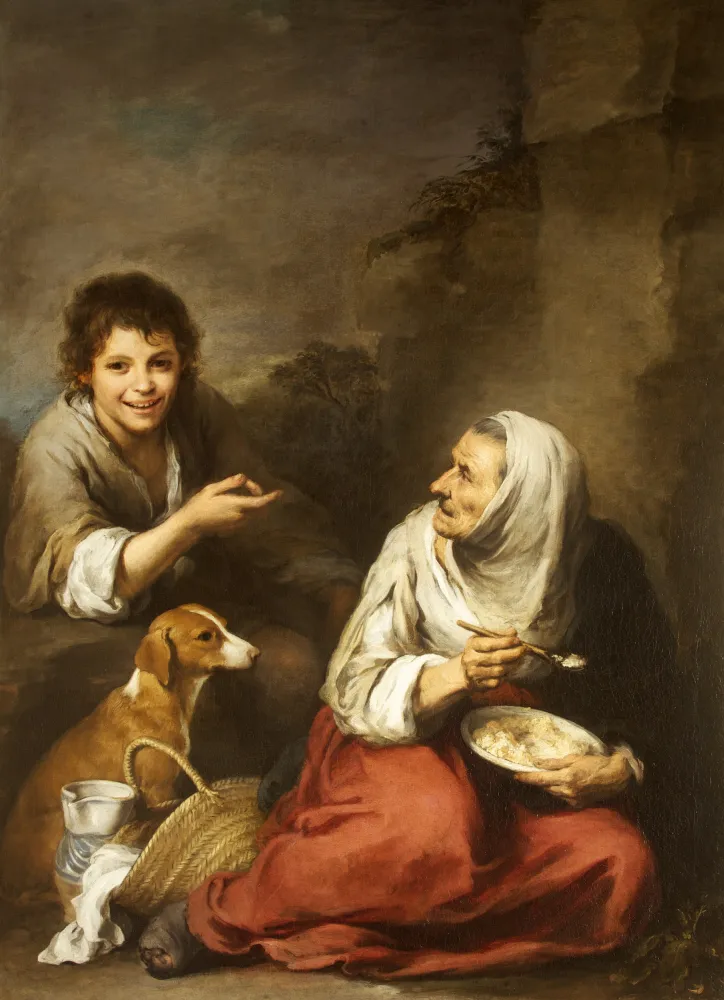
Photo: Bartolomé Esteban Murillo, Public domain, via Wikimedia Commons
Somewhere between the third and fourth slice of loaded deep-dish pizza, @bigbitesbrittany pauses for the camera. She doesn't apologize. She doesn't crack a self-deprecating joke. She just chews, makes direct eye contact with 2.3 million followers, and keeps going. The comments flood in like a broken fire hydrant — heart emojis, crying-laughing faces, and at least forty-seven people typing "QUEEN" in all caps.
This is the new frontier of food content, and it is absolutely unhinged in the best possible way.
The indulgence influencer has arrived, planted a flag in your For You page, and is not moving. These are creators — predominantly women, predominantly Gen Z, with a growing contingent of millennials who are absolutely done apologizing — who have built content empires out of eating without shame. And the numbers behind this movement are genuinely wild.
The Hustle Underneath the Hash Browns
Let's be clear about something: this isn't just vibes. This is a business model.
The most successful indulgence creators are pulling in brand deals from fast food chains, snack companies, and beverage brands at rates that would make your college guidance counselor weep into their sensible blazer. Creators in this niche with follower counts in the mid-six figures are reportedly negotiating $10,000 to $30,000 per sponsored post. The ones with genuine viral traction? Considerably more.
And the content formula isn't complicated. You eat something enormous, something indulgent, something that a 2009 women's magazine would have described as a "guilty pleasure" — and you do it with zero guilt visible on your face. You might narrate. You might just eat. Either way, the algorithm rewards you, because people cannot stop watching.
What's fascinating is the specific cultural timing of all this. These creators didn't emerge in a vacuum. They arrived directly on the heels of roughly two decades of diet culture running absolutely rampant across American media — the Weight Watchers celebrity campaigns, the 100-calorie pack obsession, the era of "clean eating" Instagram that made everyone feel like a moral failure for owning a bag of Doritos. The indulgence influencer is, consciously or not, a direct response to all of that noise.
Liberation or Leverage?
Here's where things get genuinely complicated, and where Fat 315 has to be honest with you.
The performance of unapologetic eating is not the same thing as unapologetic eating. There's a meaningful difference between someone who has genuinely worked through their relationship with food and someone who has identified a profitable aesthetic and is executing it with the precision of a content strategist. Both exist in this space. They often look identical on a four-second clip.
Some creators in this lane have spoken openly about the strange psychological tension of building a brand around eating freely while still dealing with very real body image pressures behind the scenes. The comments sections of these videos are not uniformly supportive — for every "this healed something in me" there's something uglier lurking, and creators absorb that constantly. The performance of not caring requires a tremendous amount of caring.
There's also the question of what happens when a brand pays you to eat their product with enthusiasm. Does the message shift? Does "I eat what I want because I'm free" quietly become "I eat what I want because Taco Bell sent me a check"? These aren't rhetorical questions — they're the actual negotiations happening in creator inboxes every week.
Gen Z Didn't Invent This — They Just Made It Louder
It would be easy to frame indulgence content as a Gen Z invention, but that's not quite right. The lineage goes back further — to fat acceptance activists who were writing and organizing long before TikTok existed, to food bloggers in the early 2010s who pushed back against the tyranny of the salad photo, to the body positivity movement that, ironically, got so thoroughly co-opted by mainstream wellness brands that it nearly lost all meaning.
What Gen Z did was strip away the manifesto and replace it with pure content energy. You don't need a blog post about diet culture's systemic harms. You need a 45-second video of yourself destroying a loaded breakfast burrito at 11am on a Tuesday while a trending audio plays. The message is embedded in the act itself. It's efficient. It's extremely watchable. And it converts.
This is either a brilliant evolution of the message or a significant flattening of it, depending on who you ask and how much of the nuance they're willing to sit with.
The Authenticity Tax
The creators who are actually building lasting audiences in this space — not just chasing one viral moment — tend to share one quality: they're consistent in a way that reads as real. Their audiences can tell the difference between someone genuinely enjoying a plate of loaded nachos and someone performing the enjoyment of nachos for engagement metrics. That distinction matters more than almost any production quality or follower count.
The ones who last are also, generally, the ones who are honest about the complexity. Who acknowledge, sometimes, that it's not always easy. Who don't pretend that posting a video of yourself eating a funnel cake automatically resolves decades of cultural messaging about bodies and food and worth.
That honesty is rarer than the content itself. And audiences — particularly younger ones who have extremely finely-tuned authenticity detectors — reward it heavily when they find it.
What It Actually Means for the Rest of Us
If you're not a creator, if you're just someone who eats food and occasionally watches other people eat food on the internet, here's the thing worth taking away from all of this: the fact that eating without shame has become a content category is both a sign of progress and a sign of how far we still have to go.
In a healthier cultural moment, someone eating a burger without apologizing would not be a statement. It would just be lunch. The fact that it registers as radical, as worthy of millions of views and brand partnerships and think pieces, tells you something about the baseline we're working from.
But in the meantime? The food looks incredible. The creators are funny. And watching someone eat a double-stacked smash burger with the energy of someone who has genuinely let go of every bad thing a magazine ever told them — even if it's partly performance, even if the brand deal is in the bio — still hits different than the alternative.
Eat loud. We'll be watching.